Ńdẹ́bẹ́A written script for ÌgbòType Ńdébé ↗

The project / Development

From an idea
to a written world.

Ndebe began as an idea in late 2008, and was invented in early 2009 by Lotanna Igwe-Odunze.

The beginning

Lotanna, then a 20 year old college sophomore, spent countless hours researching and developing the written style for the script, and coming up with solutions to the phonological challenge of writing Igbo.To teach the script and record its progress, Lotanna created and shared videos on Youtube and blog posts on Sugabellyrocks.com, Ndebe.blogspot.com and Ndebe.Wordpress.com
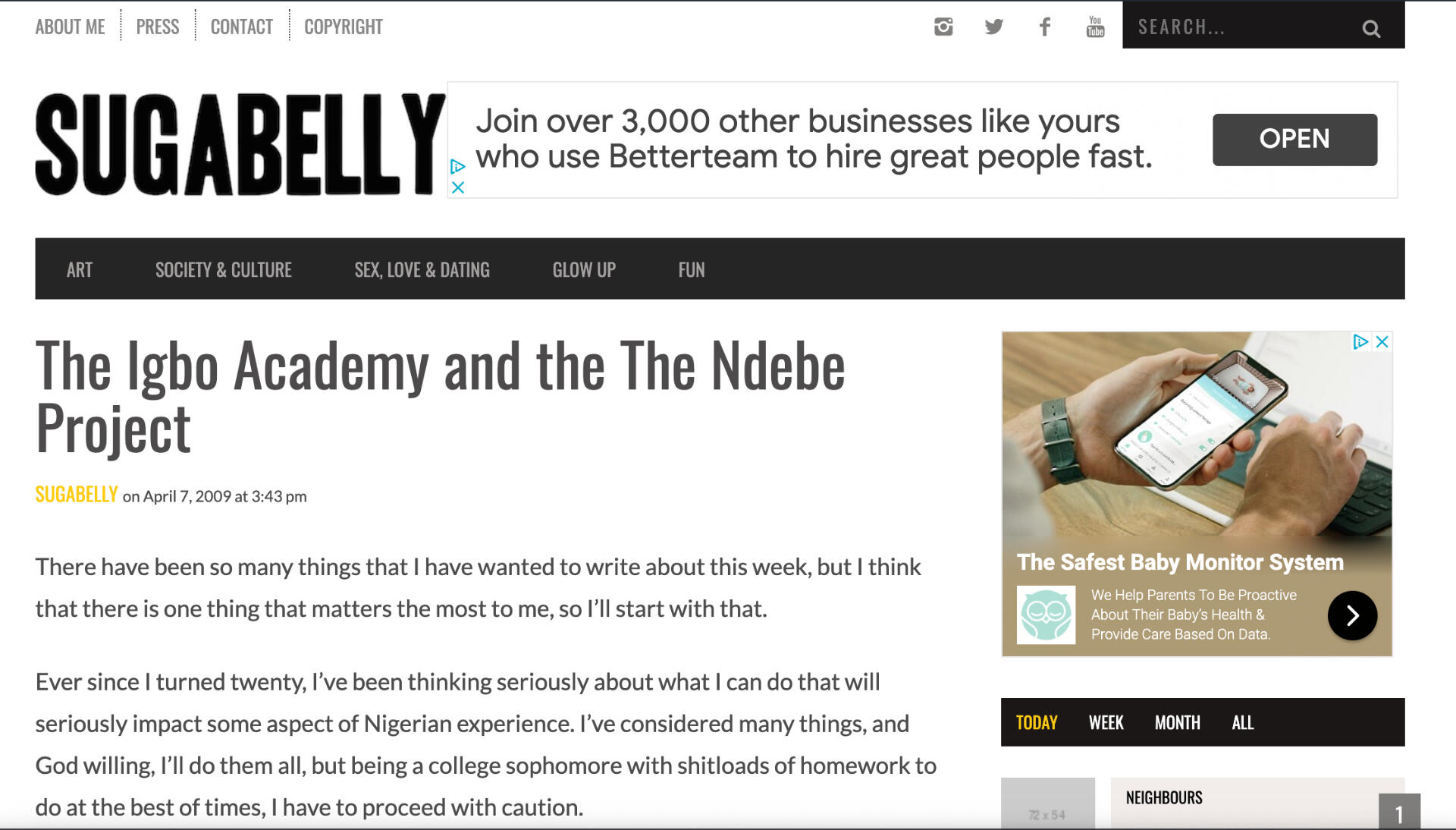
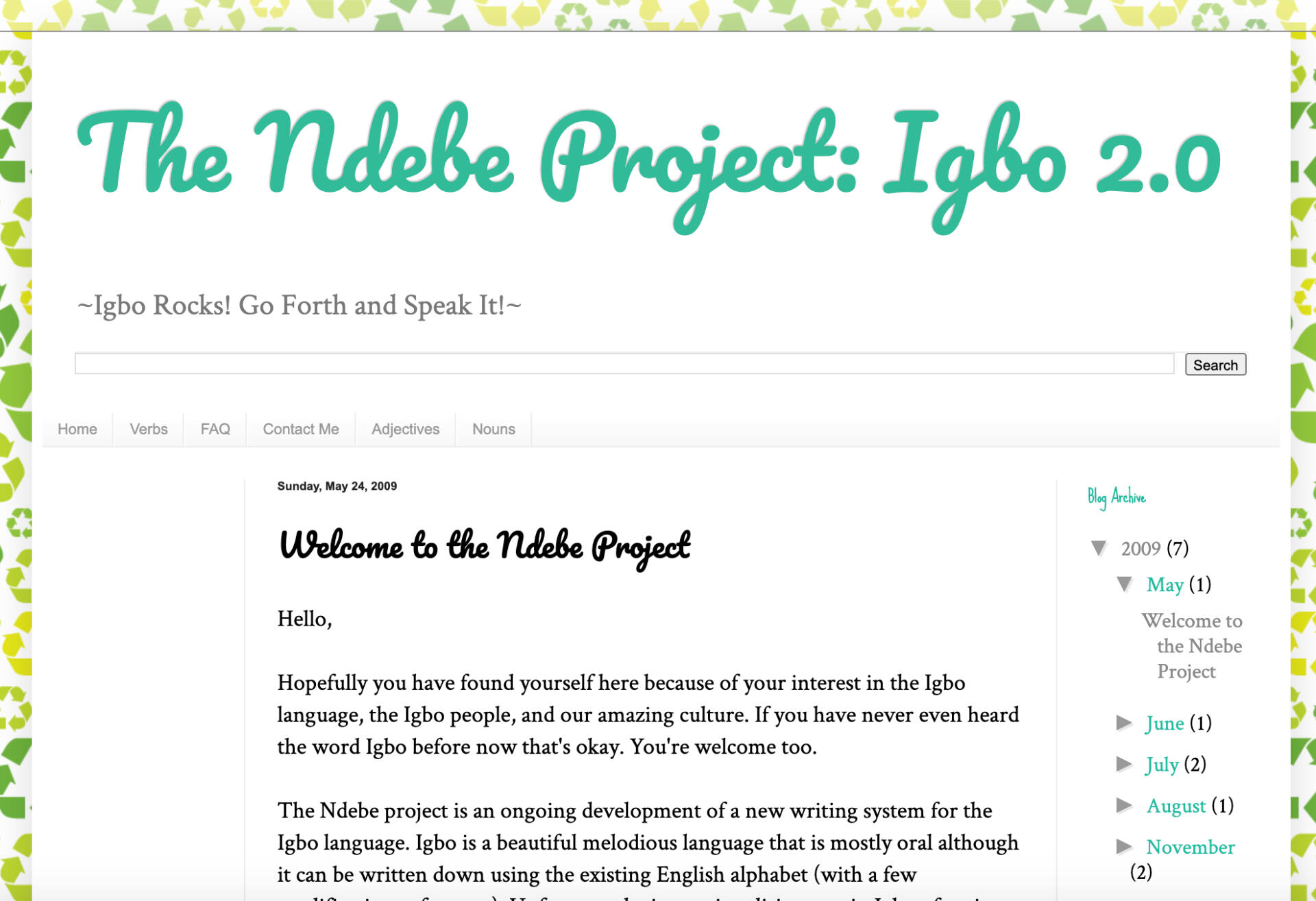
Development started in earnest the same year, and it was first published and introduced to the world on her blog on April 7, 2009 via a post titled The Igbo Academy and The Ndebe Project and then on a blog set up for the purpose the via a post on May 24, 2009 titled Welcome to The Ndebe Project
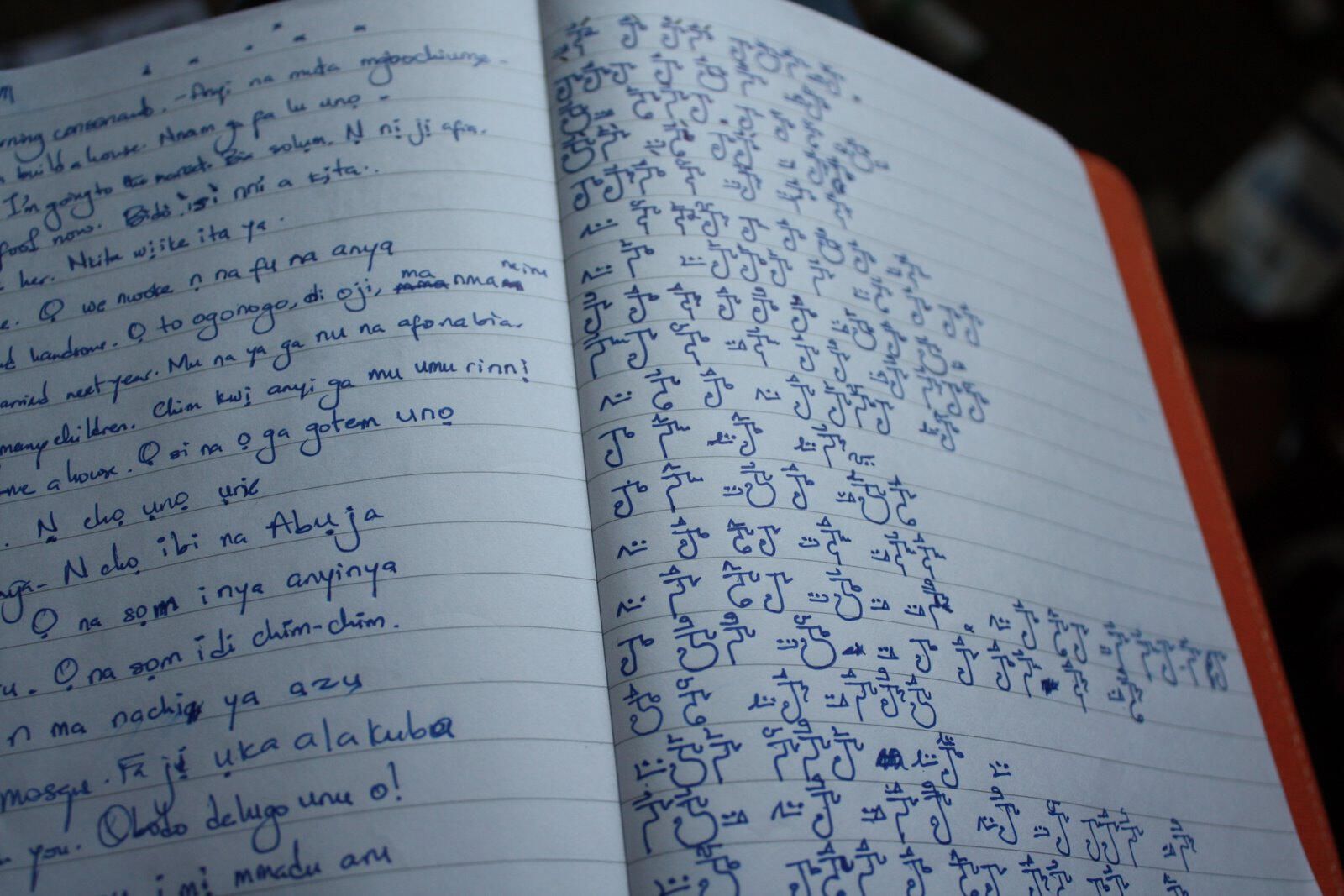
Early Ńdébé handwriting, May 2009
Early Ndebe script writing of Igbo by Lotanna Igwe-Odunze dated May 2009

2009

2009 Ńdébé development record
Early script development
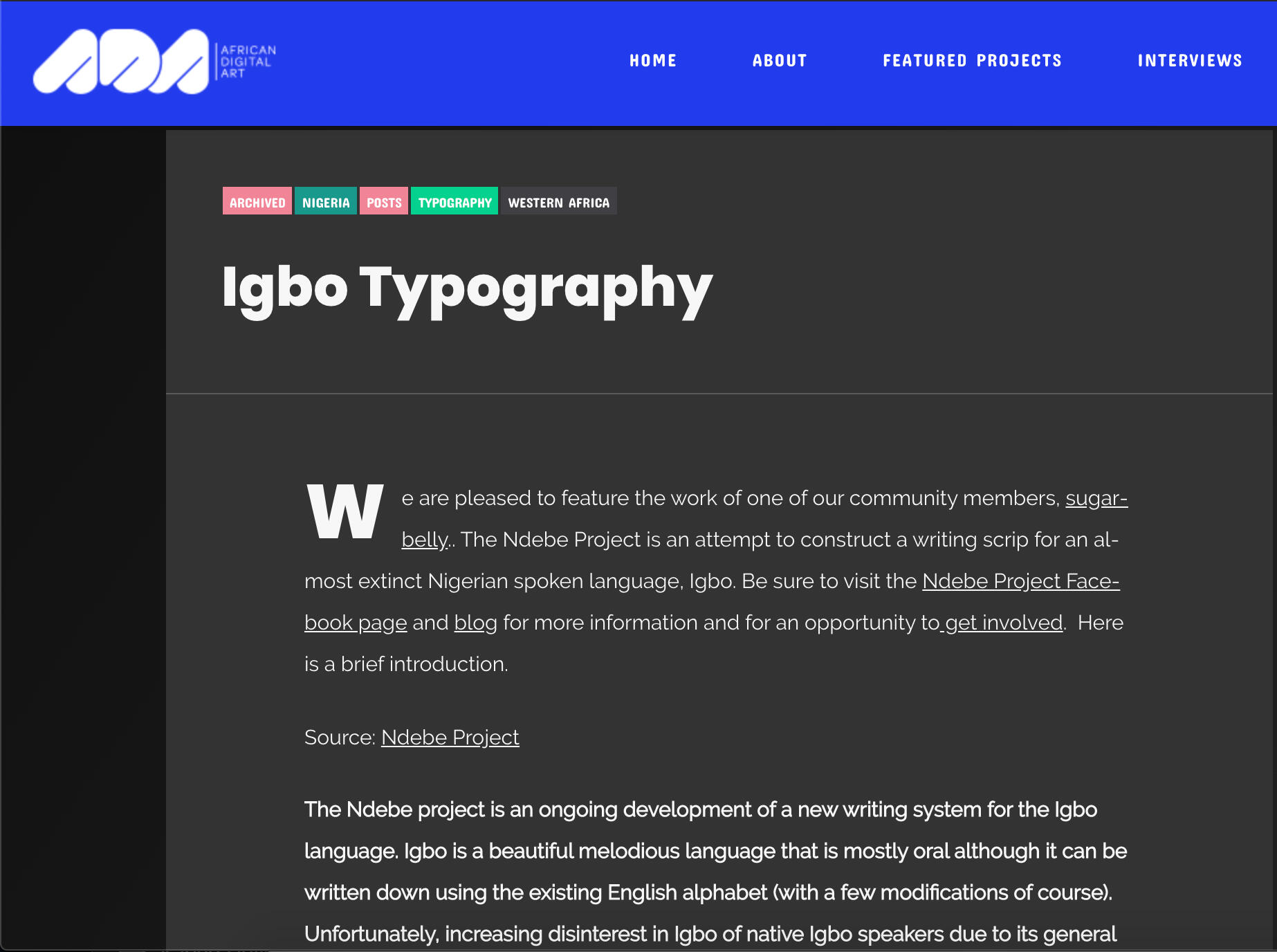
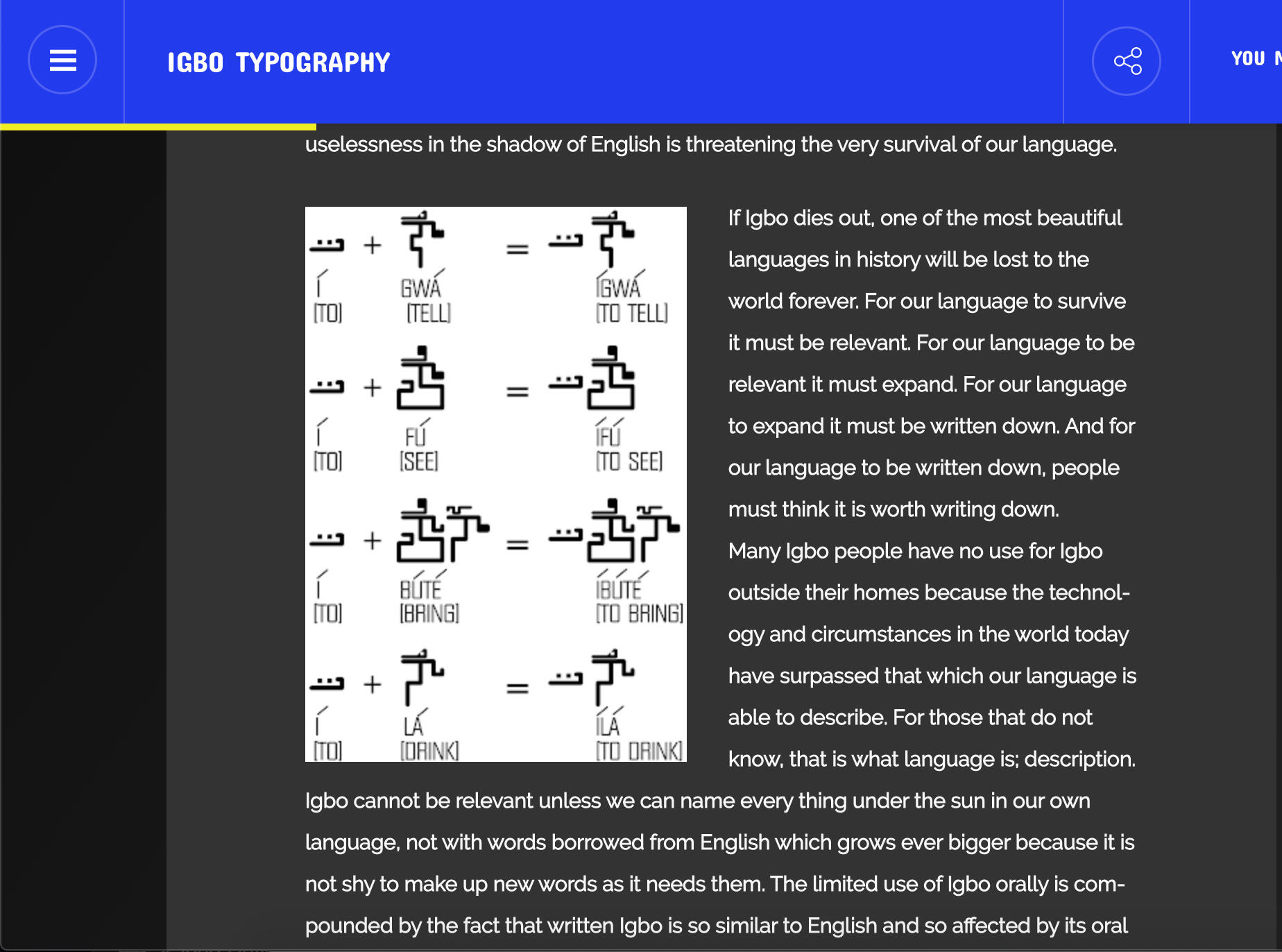
Ndebe was subsequently featured in African Digital Art in a November 2009 post titled Igbo Typography.
Ńdébé featured in African Digital Art
Early Ńdébé letterform record

2011

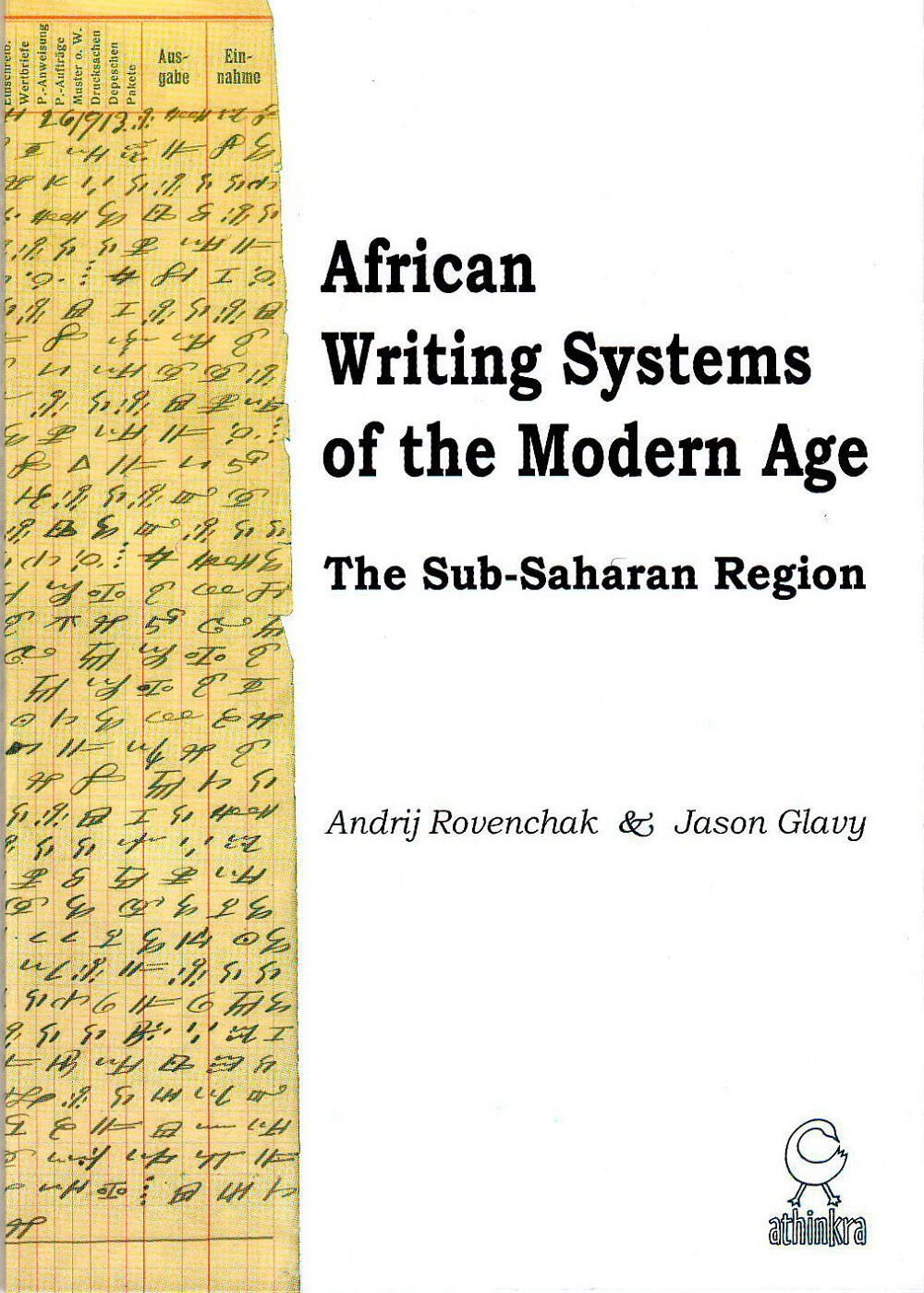
In 2011, the Ndebe script was published in African Writing Systems of the Modern Age, a book by Andrij Rovenchak and Jason Glavy
Cover of African Writing Systems of the Modern Age

2012

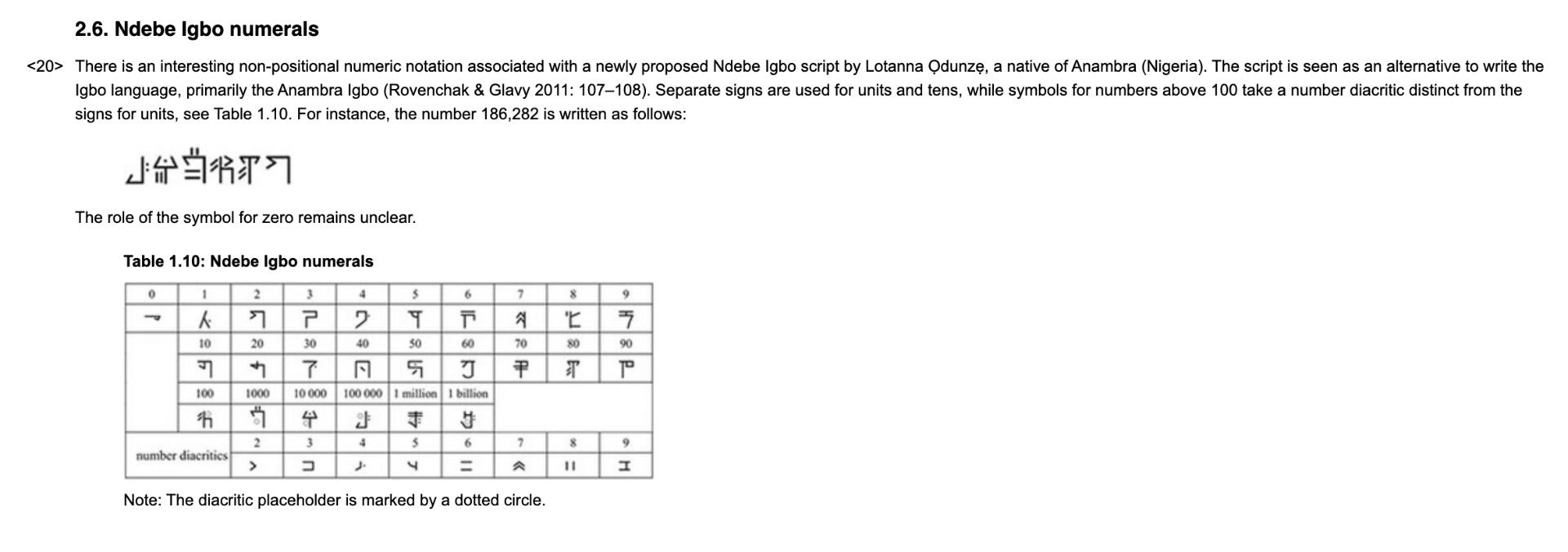
In 2012, the numeral system of the Ndebe Script was highlighted in an academic paper at the Ivan Franko National University of Lviv, Ukraine titled Numerical Notation in Africa
Numerical Notation in Africa, figure 2.6
Numerical Notation in Africa fig. 2.6

2014

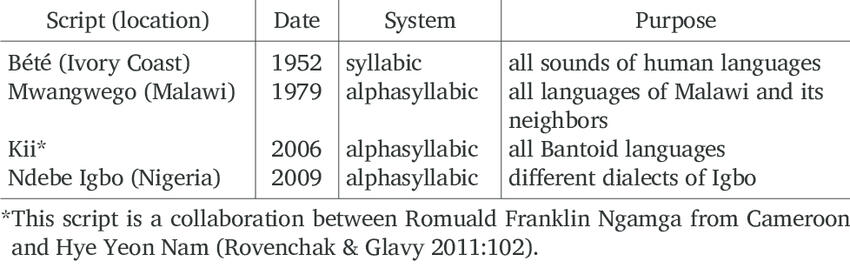
The Ndebe script was included in a January 2014 academic research article published in SCRIPTA Volume 6 by Alex de Voogt of the American Museum of Natural History titled The Cultural Transmission of Script in Africa: the presence of syllabaries
SCRIPTA Volume 6, January 2014
SCRIPT Volume 6, January 2014
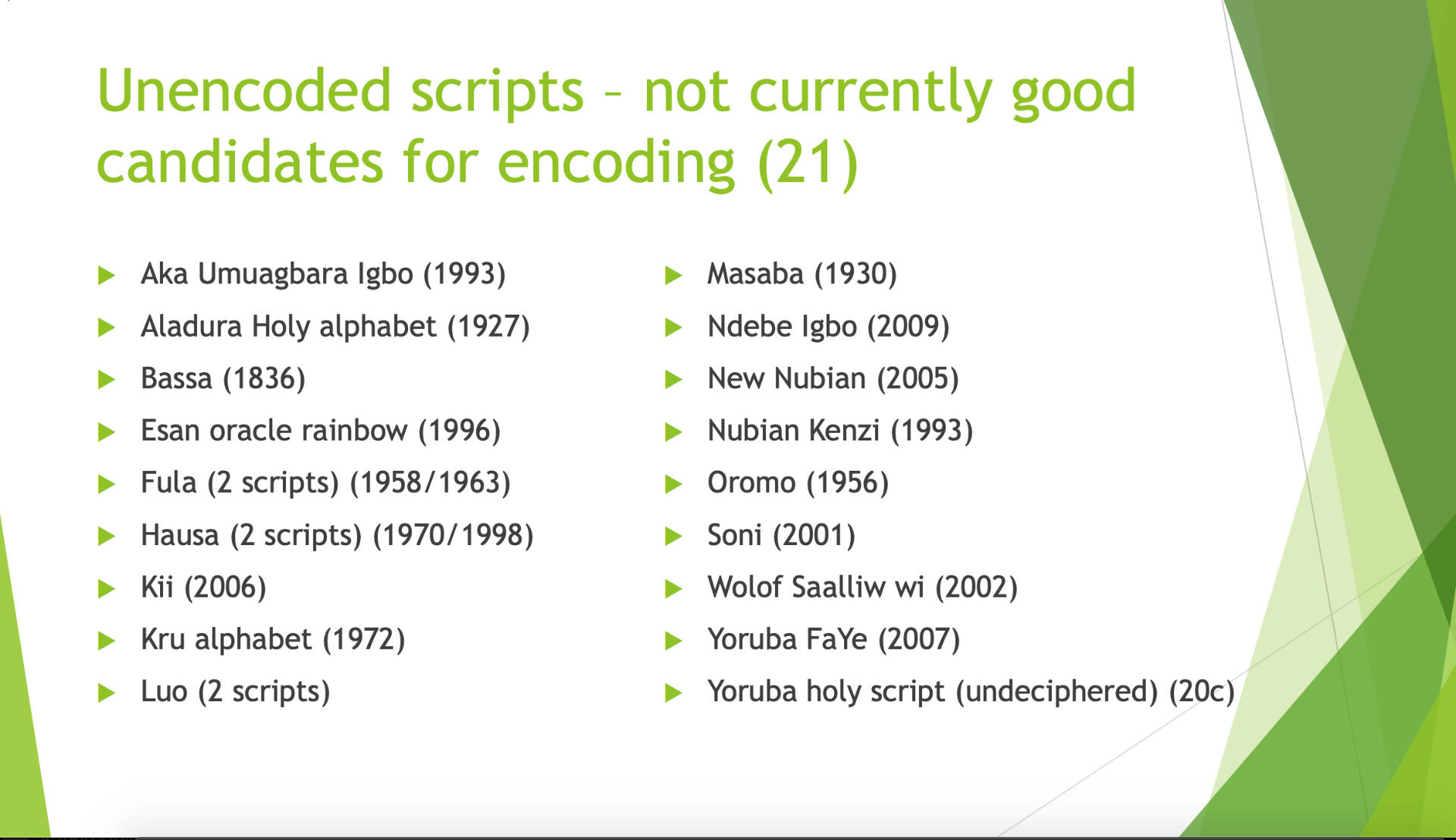
On November 5, 2014, the Ndebe script was included as a candidate for digitisation at the Internationalisation and Unicode Conference 38 in Santa Clara, California, in a presentation by Deborah Anderson, SEI of the University of California Berkeley Department of Linguistics, and
Anshuman Pandey, of the University of Michigan Department of History titled Expanding the Unicode Repertoire: Unencoded Scripts of Africa and Asia in consideration for Unicode adoption, although it was not considered a strong candidate at the time.
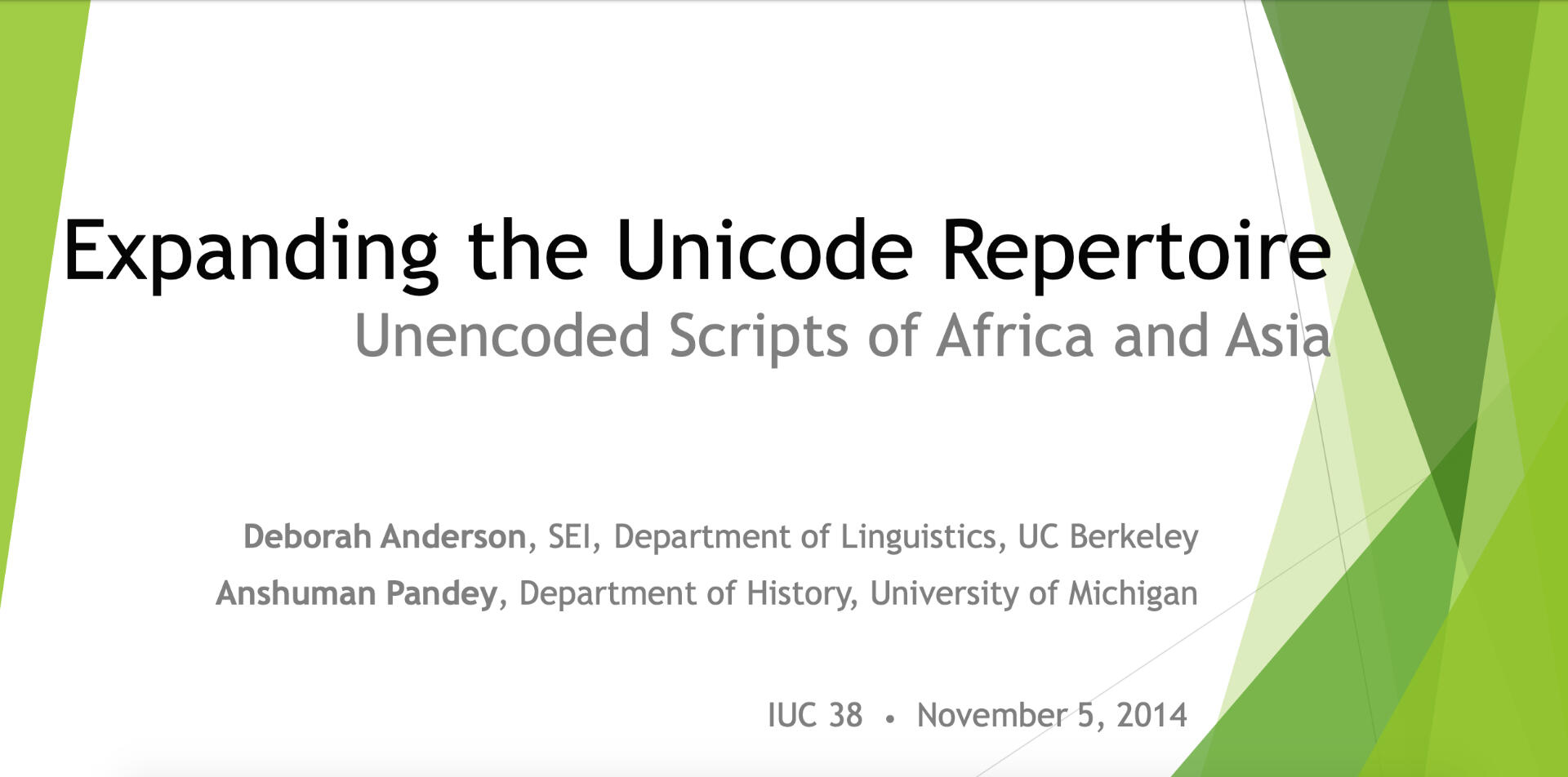
Internationalisation and Unicode Conference presentation
Unencoded scripts presentation record
Internationalisation and Unicode Conference 38, November 3-5, 2014

2020

A new introduction to the world

In July 2020, Lotanna shared the developed Ńdébé script and its syllabary book with a wider audience. Readers began trying the script for themselves, and features in Popula, Folio Nigeria and Channels Television introduced the work to new readers.

Read Otosirieze’s profile, first published in 2020 →

2023

Refining the letterforms

A September 2023 research update records Lotanna’s February announcement of letterform changes based on user feedback, alongside the availability of a keyboard.

Read the historical research update, pages 8–9 →

2024–2025

The conversation continues

Open Country Mag republished the Folio Nigeria profile in March 2024. African Digital Art featured Ńdébé in February 2025, and a 2025 Lancaster University thesis included it in an overview of Igbo writing systems.

Explore these articles and research references →

2026

From static charts to living text

The current work brings Ńdébé Rounded and Ńdébé Soft Bold together with typing tools, a searchable Script Codex, numeral references, arithmetic lessons and teaching forms.

Stems, radicals and vowels can now be demonstrated as selectable font text. Dotted placeholders show how a character is built, while the online editor lets writers compose, copy, save and reopen their work.

This website is being rebuilt in preview around those tools. The syllabary book will be rewritten using the current fonts, and the former shop will return only when the new clothing line is ready.